
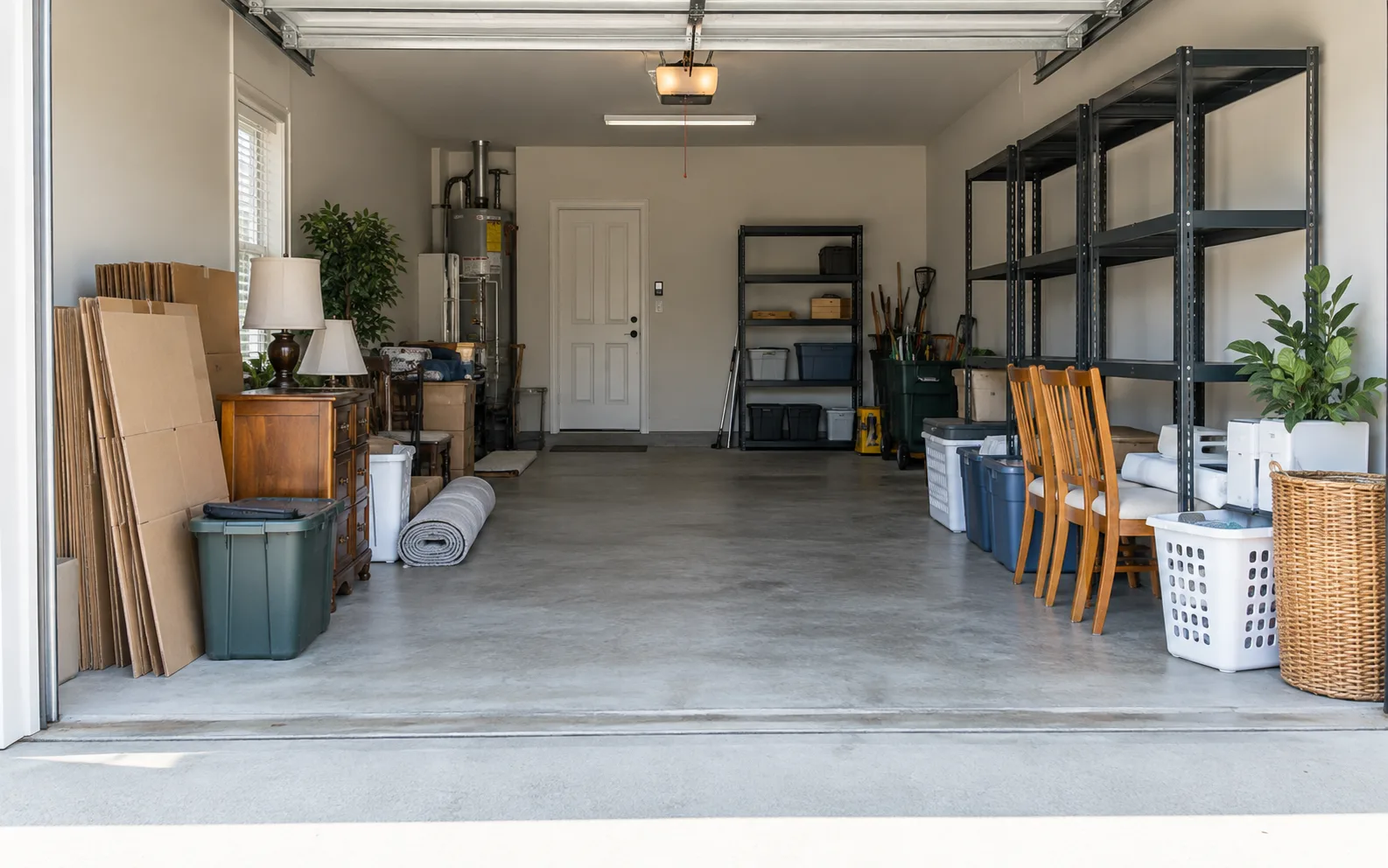
A useful garage cleanout starts with decisions, not lifting. Mark the items that must stay, group obvious removals, keep hazardous products out of the pile, and open a safe path from the garage to the truck or trailer. The hauling crew can do the carrying for approved items.
A one-pass preparation checklist
- Choose the purpose of the space. Decide whether you need room for a car, a workbench, storage shelves or a move-out deadline. That gives you a clear test for what earns space.
- Mark keepers before sorting removals. Use one visible area for keepers, or place a simple note on larger pieces. The goal is to prevent an item from being discussed twice.
- Separate personal records. Pull out tax files, medical papers, IDs, photos, keys and devices that may contain personal data. Do not leave them mixed into boxes for a hauling crew to sort.
- Build a walkable lane. Clear the route from the item pile to the garage door. Move vehicles, hoses and low objects that can cause a trip.
- Set aside restricted material. Paint, solvents, cleaners, pesticides, batteries, fuel and automotive fluids should stay out of the general pile until the correct disposal route is confirmed.
- Photograph the whole load. Take two or three wide photos from different corners, then close photos of heavy or unusual items. A photo of one box does not show the volume of the job.
What not to do before the crew arrives
Do not dismantle a heavy object if you are unsure how it is supported, connected or balanced. Do not pour products together or transfer them into food containers. The EPA advises keeping household hazardous products in their original containers when possible, following label directions and never mixing leftovers because incompatible products can react, ignite or explode. See the EPA household hazardous waste guidance, retrieved September 18, 2026 and applicable across the United States.
Avoid dragging bulky furniture through a crowded lane just to stage it outside. Awkward posture, poor handholds and long carrying distances all change lifting risk. OSHA notes that weight is only one factor; twisting, reach, lift height and repetition matter too. If a piece is heavy or awkward, leave it for a professional assessment. See OSHA heavy lifting guidance, retrieved September 18, 2026.
Details to include when asking for a quote
| Detail | Why it matters |
|---|---|
| Wide photos of the full garage | Shows load volume and whether items are mixed or already grouped. |
| Largest and heaviest pieces | Helps identify equipment, staffing and special handling questions. |
| Garage-to-street route | Shows stairs, narrow doors, gates, slopes and carrying distance. |
| Parking limits | Helps plan safe access for the hauling vehicle. |
| Items requiring confirmation | Flags appliances, electronics, renovation debris or other material that may follow different rules. |
Ten-minute final check
- Vehicles are out of the working route.
- Keepers are grouped or clearly marked.
- Hazardous products are upright and separate.
- Children and pets have another safe area.
- The crew can reach the garage without a locked gate or blocked drive.
- Your phone is available if the team has a scope question.
For a Buford garage cleanout, call (678) 697-8928 or email the item list and photos. Confirm the scope and quote before the work begins.